Why Quality Matters in Faith-Based Film Production (Revised)
- Anthony De La Rosa
- Mar 28
- 5 min read

In the world of filmmaking, there’s an old saying: "The message is the medium." For those of us in faith-based media, the "message" is the most important one in human history. So, why do we sometimes settle for a "medium" that doesn’t quite live up to it? For years, Christian cinema was often associated with low budgets, predictable scripts, and production values that felt a decade behind the mainstream. But things are changing fast.
As we move through 2026, the standard for faith-based content has skyrocketed. At Copeck Digital Media Group LLC, we believe that excellence isn’t just about looking "expensive": it’s about stewardship. If we want to reach a modern audience, we have to meet them where they are with high-quality storytelling that resonates emotionally and visually.
In this post, we’re going to explore why quality is no longer optional in faith-based production, how the industry is shifting away from old stigmas, and practical ways you can elevate your own creative projects to honor the message you’re sharing.
Breaking the "Cringe" Factor: A New Era of Credibility
Historically, faith-based films have struggled with a reputation for being "cheesy." Critics often pointed toward weak writing or substandard acting as reasons why Christian films stayed in a bubble. This perception created a massive barrier for mainstream audiences who might have been open to the message but were turned off by the delivery.
However, recent data shows a major shift. An uptick in Rotten Tomatoes scores and critical reception indicates that faith-based productions are finally being evaluated on the same playing field as secular films. When we invest in better storytelling, we aren't just making a "better Christian movie": we're making a better movie, period.
The Role of Professional Talent
One of the most significant shifts has been the involvement of well-established actors. Seeing names like Patricia Heaton, Zachary Levi, and Kelsey Grammer in faith-based projects does more than just fill seats; it brings a level of professional credibility to the set. Professional actors bring a depth to characters that goes beyond the script, helping to move the narrative away from clichéd archetypes toward real, relatable human complexity.
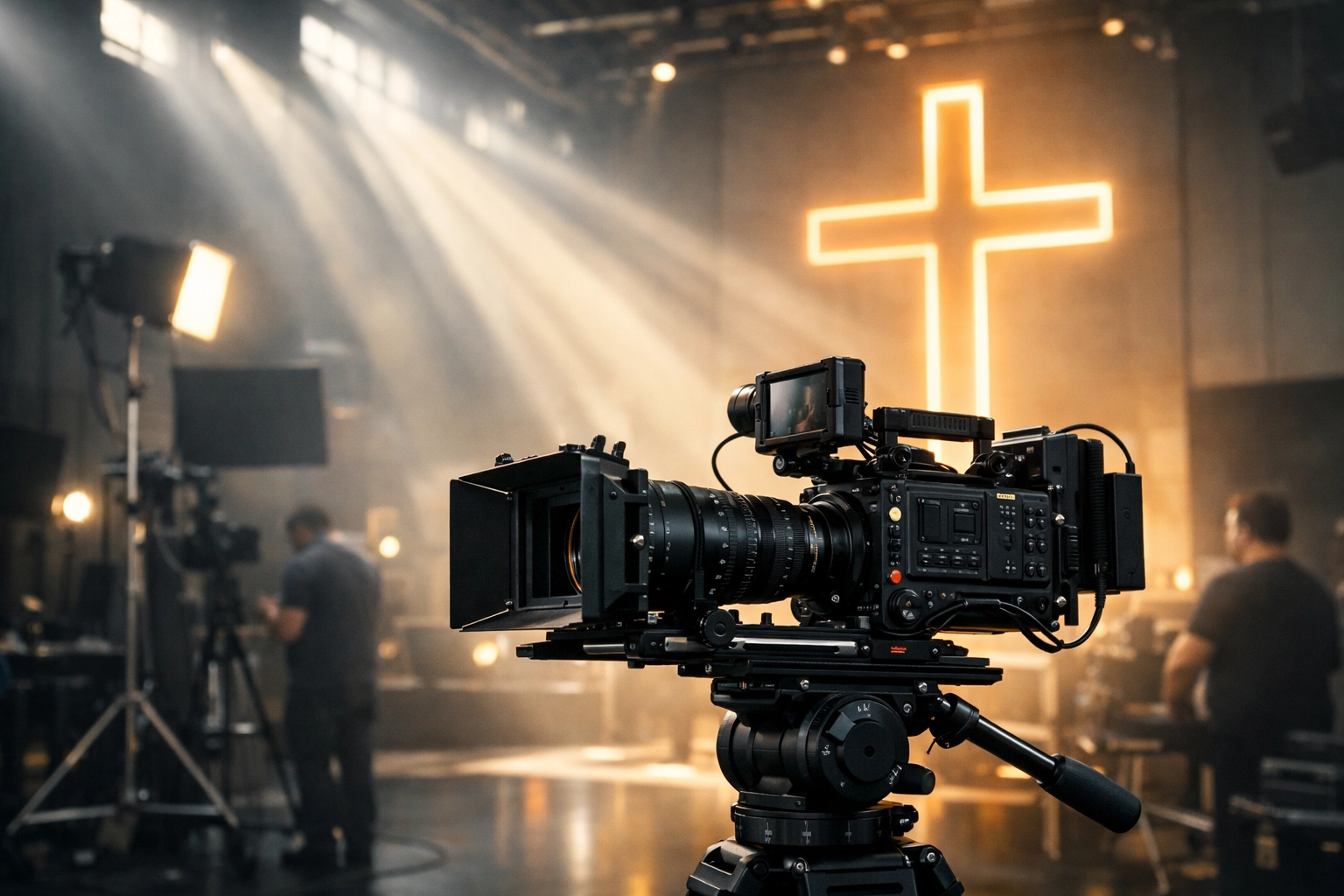
A professional film camera setup in a bright, light-filled studio, featuring a glowing cross in the background, symbolizing the intersection of high-end production and faith.
Why Excellence is a Form of Worship
From an educational standpoint, we have to look at production quality as a matter of theological integrity. If we believe that God is the ultimate Creator, then our creative work should reflect a pursuit of excellence.
When a film is poorly lit, has distracting audio, or features a script that feels "preachy" rather than authentic, it creates a "hiccup" in the viewer's experience. Instead of focusing on the grace of the Gospel or the power of a testimony, the audience is focused on the technical flaws. High-quality production removes those distractions, allowing the viewer to be fully immersed in the story. You can explore more about this philosophy in our post on exploring the vision of Christian media through film and artwork.
Impact on Box Office and Reach
Quality isn't just about art; it’s about impact. Look at the recent success of The Forge from the Kendrick Brothers. By achieving an A+ CinemaScore, they proved that when you combine a powerful message with high production standards, you create something that resonates deeply with audiences.
When faith-based films perform competitively at the box office, it opens doors for more funding, better distribution, and a wider cultural reach. It proves to the "gatekeepers" of the digital landscape that there is a massive hunger for content that is both spiritually uplifting and professionally produced.
Storytelling vs. Preaching: Reaching Beyond the Choir
One of the biggest challenges in faith-based media is the balance between being evangelistic and being artistic. For a long time, the formula was "preach first, tell a story second." But today’s viewers are savvy. They want to see characters who struggle, fail, and find redemption in ways that feel honest.
Authentic Narratives
To reach beyond the Christian community, we have to prioritize authentic storytelling. This means:
Developing characters with realistic flaws.
Allowing for tension and conflict that doesn't always resolve in the first five minutes.
Using visual metaphors (like light and shadow) to tell the story without over-explaining everything through dialogue.
By focusing on the "human" side of the faith journey, we invite secular audiences to engage with the themes of the Bible without feeling like they are being lectured. This transition from dogmatism to genuine narrative is key to exploring the impact of Christian media in today's digital landscape.
![[IMAGE] Stark horizontal divide between black and white](https://cdn.marblism.com/0OrR0rConm9.webp)
This stark divide symbolizes the choices between truth and deception, a theme that requires high-quality storytelling to navigate effectively.
Practical Ways to Elevate Your Production Quality
You don't need a multi-million dollar Hollywood budget to improve the quality of your work. Whether you’re working on a short for your church or a feature-length project, small shifts in your approach can make a world of difference.
1. Prioritize Sound Above Everything
You can get away with a slightly "indie" look, but you cannot get away with bad audio. If the audience can't hear the dialogue clearly, they will tune out within seconds. Invest in good microphones and spend time in post-production cleaning up the soundscape.
2. Focus on Lighting and Color Grading
Lighting sets the mood. Instead of just "making things bright," think about how light can represent the spiritual state of your characters. High-quality color grading in post-production can give a low-budget project a cinematic, "big-screen" feel.
3. Polish the Script (Then Polish It Again)
The script is your blueprint. If the dialogue feels wooden, no amount of expensive camera equipment can save it. Host table reads, ask for honest feedback from people outside your immediate circle, and don't be afraid to cut scenes that feel too "on the nose."
4. Engage with the Community
Don't create in a vacuum. Join discussions with other creators to see what tools and techniques they are using. You can find great insights in groups like the Christina Film Talk discussion or connect with other artists in the Christian Artist Talk.
The Future of Faith in Media
As we look toward the future, the divide between "Christian film" and "mainstream film" will continue to blur: not because we are watering down the message, but because our methods are becoming more sophisticated. The integration of new technologies, better training for young filmmakers, and a renewed focus on artistic excellence are paving the way for a golden age of faith-based media.
![[IMAGE] Circular digital test pattern on green background](https://cdn.marblism.com/L229UFjXHHR.webp)
Technical excellence is the foundation upon which we build our creative visions.
In 2026 and beyond, Copeck Digital Media Group LLC remains committed to helping creators bridge the gap between faith and film. By valuing quality, we aren't just following a trend; we are honoring the Creator and ensuring that the most important stories ever told are seen and heard by as many people as possible.
Whether you are just starting your journey or you’re a seasoned pro, remember: your work is a reflection of your faith. Let’s make sure it’s a reflection of excellence. If you're looking for more resources or want to browse our latest projects, feel free to check out our blog or visit our main site for more information on how we're changing the landscape of faith-based media.
Comments