The Power of Faith on Screen: How Christian Films are Spreading the Gospel Today
- Anthony De La Rosa
- Mar 26
- 5 min read

For a long time, the phrase "Christian film" might have brought to mind low-budget productions with stiff acting and predictable plots. But if you’ve been paying attention to the digital landscape lately, you’ve probably noticed a massive shift. We aren’t just making "church movies" anymore; we are crafting cinematic experiences that rival major Hollywood studios in both technical quality and emotional depth.
At Copeck Digital Media Group LLC, we believe that film is one of the most potent tools for modern evangelism. In a world saturated with noise, a well-told story can cut through the chaos and speak directly to the heart. This blog post will explore how contemporary Christian films are evolving, the diverse ways they share the Gospel, and why high-quality production is essential for reaching a global audience in 2026.
A New Era of Narrative Excellence
The modern Christian film industry has moved past the "one-size-fits-all" approach. Filmmakers today understand that the audience is diverse, and the way we present biblical truths needs to reflect that. We are seeing a healthy balance between explicit faith messaging and subtle, narrative-driven storytelling that addresses real-world issues.
Direct vs. Subtle Messaging
There is a time and place for both approaches. Some films are designed to be direct tools for the Great Commission, clearly presenting the plan of salvation. Others take a more "parabolic" approach, much like Jesus did, using stories to plant seeds of truth that viewers can reflect on later.
Explicit Narratives: These films often focus on a character's direct conversion or a specific biblical event. They serve as great resources for church groups and outreach events.
Subtle Themes: These movies weave biblical principles: like forgiveness, sacrifice, and redemption: into secular settings. They often appeal to wider audiences who might not step foot in a church but are looking for hope and meaning.
For a deeper dive into how we view this balance, you can check out our post on exploring the vision of Christian media through film and artwork.

Real Issues: Bringing Faith into the 2026 Landscape
One of the biggest changes in the current film landscape is the willingness to tackle "gritty" and complex topics. Faith isn't presented as a magic wand that fixes everything in ninety minutes. Instead, modern Christian cinema shows how faith sustains us through the hardest parts of the human experience.
The 2026 lineup of faith-based films is a testament to this thematic diversity:
Human Trafficking (Still Hope): Highlighting the fight for justice and the value of every human life.
Immigration and Displacement (Between Borders): Exploring compassion and what it means to love your neighbor in a globalized world.
Family Restoration (I Can Only Imagine 2): Showing that no relationship is too broken for God’s grace to reach.
Spiritual Consequences (Choices): A realistic look at how our daily decisions impact our spiritual walk and the lives of those around us.
By grounding faith in these real-world struggles, filmmakers demonstrate that Christianity is relevant to the problems people are facing right now. It moves the Gospel out of the "religious" box and into the center of everyday life.
Why Technical Excellence is a Form of Stewardship
There’s an old saying that "the message is too important to be delivered poorly." At Copeck Digital Media Group LLC, we live by this. High-quality production isn't about vanity or "showing off"; it’s about stewardship. If we believe we have the most important message in the world, we should present it with the highest level of excellence our resources allow.
The Impact of High Production Value
When a film looks and sounds professional, it gains immediate credibility with the viewer. In a digital age where everyone is a content creator, technical excellence helps your message stand out.
Visual Storytelling: Use of lighting, color grading, and framing to evoke emotion without saying a word.
Sound Design: Clear dialogue and an impactful score that draws the viewer into the moment.
Technical Integrity: Ensuring that the final product is polished and ready for various platforms, from mobile screens to theaters.
You can learn more about our commitment to these standards in our article on the impact of Christian media in today’s digital landscape.

Practical Ways to Support and Engage with Faith-Based Media
You don't have to be a director or a producer to be part of this movement. Whether you are a viewer, a ministry leader, or a creative, there are direct ways you can help spread the Gospel through film.
1. Be an Active Viewer
Engagement is the currency of the digital world. When you watch a Christian film, leave a review, share it on social media, or talk about it in your community. This helps algorithms surface faith-based content to people who might need to see it.
2. Join the Conversation
Community is where growth happens. We’ve set up dedicated spaces for believers to discuss the intersection of faith and art.
If you’re a fan of cinema, join the Christina Film Talk discussion.
If you’re a creative looking to hone your craft, check out the Christian Artist Talk group.
3. Use Media in Your Ministry
Don't just watch films at home. Use them as conversation starters in small groups or youth ministries. A twenty-minute clip from a well-produced film can often open up a heart more quickly than a long lecture.
4. Support Indie Producers
Many of the most impactful faith stories are coming from independent studios. By supporting their work: whether through pricing plans or direct project support: you are helping ensure that these stories continue to be told.
The Spiritual Responsibility of the Creator
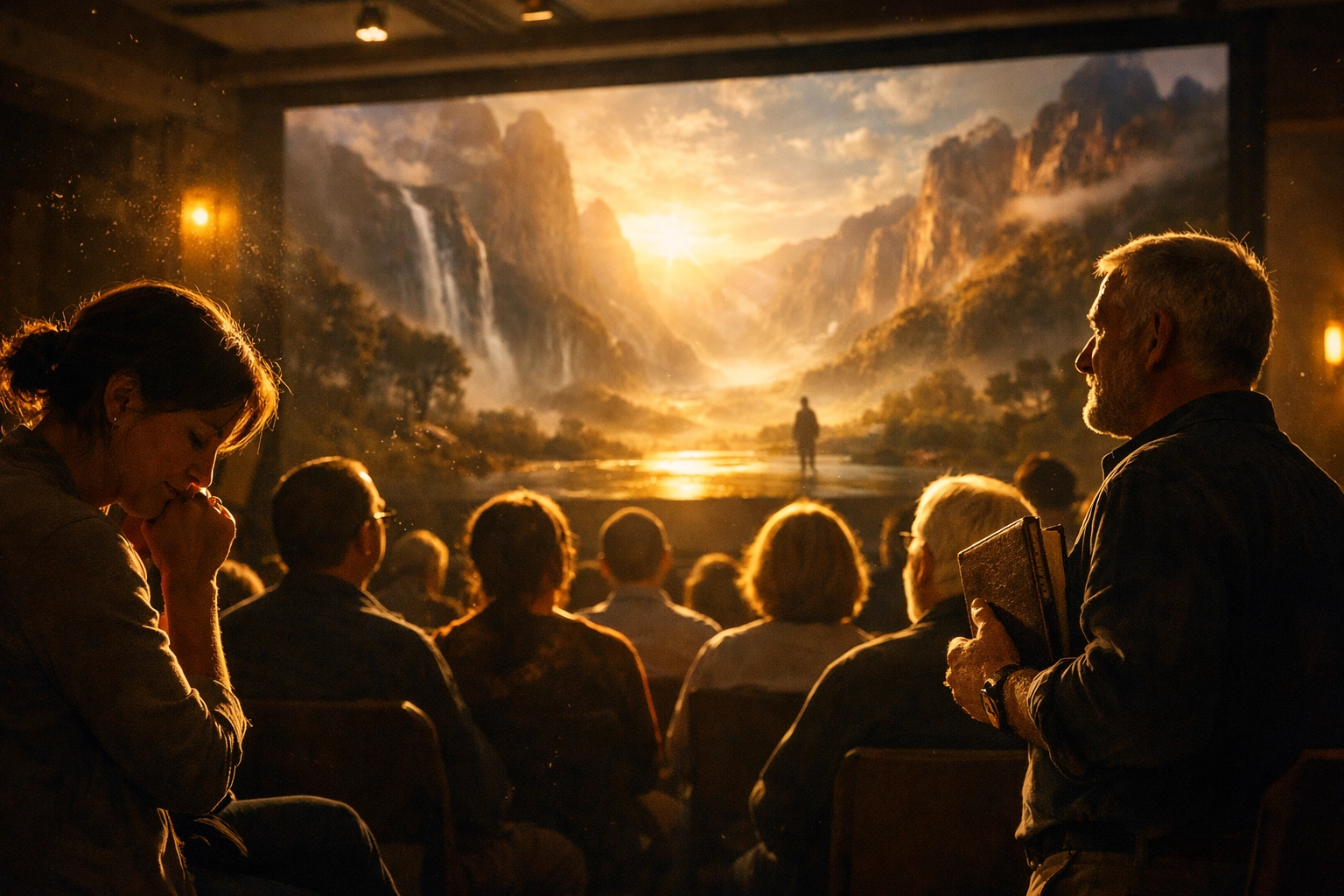
For those of us behind the camera, the call is even higher. We are not just making entertainment; we are creating a window into the Kingdom of God. This requires a commitment to theological integrity. It means searching the Scriptures to ensure that the themes we present align with the truth of the Gospel.
We must avoid the temptation to oversimplify the walk of faith. True Christian cinema should reflect the "saving grace of Jesus Christ" while also acknowledging the sanctification process: the often messy, slow, and beautiful journey of becoming more like Him.

Looking Ahead: The Future of Faith on Screen
As we move further into 2026, the technology available to us will only continue to improve. From AI-assisted editing to immersive virtual reality experiences, the tools for storytelling are expanding. However, the core mission remains the same: to lift up the name of Jesus and to share the hope found in Him.
We expect to see even more cross-industry collaborations, where Christian filmmakers work alongside tech innovators to create content that is not only spiritually sound but technologically groundbreaking. The "digital mission field" is vast, and film is the bridge that can cross almost any cultural or linguistic barrier.
If you’re interested in seeing how we’re putting these principles into practice, feel free to browse our blog or see how we work with clients through our client walkthrough service.
Faith-based media is no longer on the sidelines. It is a central part of how we fulfill the Great Commission in the 21st century. By focusing on high quality, real-world relevance, and theological truth, we can ensure that the light of the Gospel shines brighter than ever on screens across the globe.

Comments